
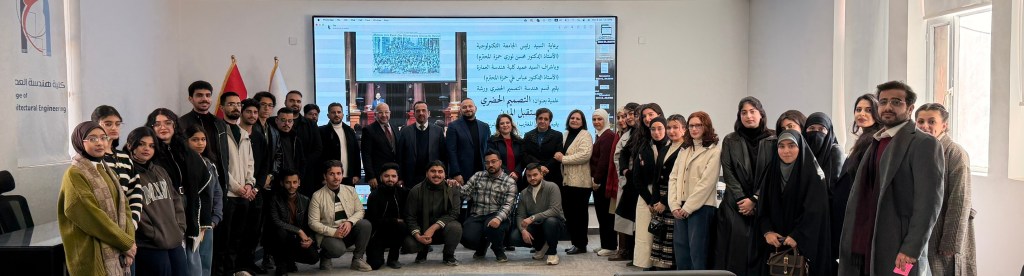
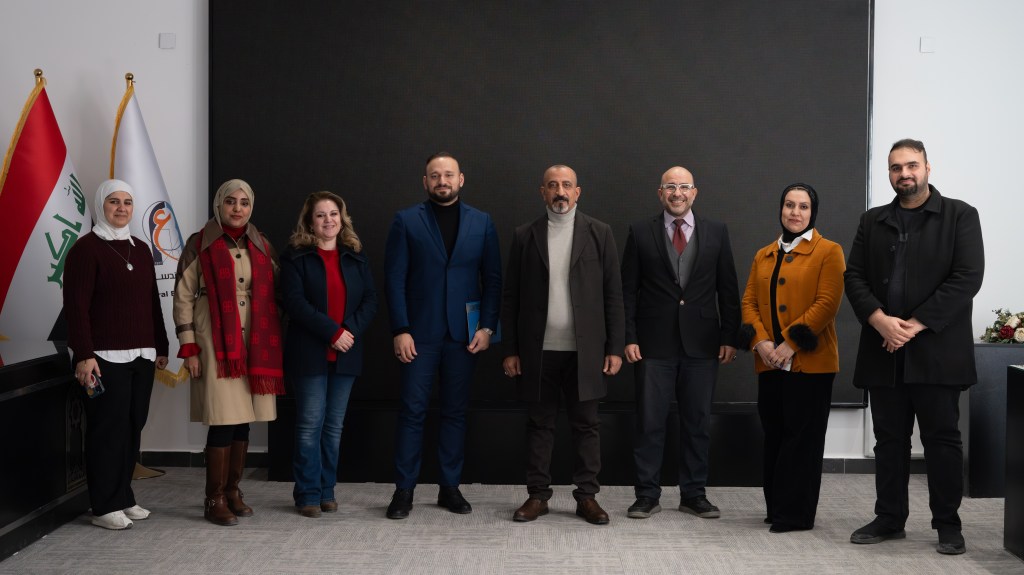
As part of its continuous efforts to engage with global debates on urban planning and design, the College of Architecture Engineering at the University of Technology in Baghdad, Iraq, organized a scientific workshop entitled “Urban Design and the Future of Cities.” The workshop was held on Monday, January 5, 2026, at the Graduate Studies Hall, with the attendance of the Dean of the College, Professor Dr. Abbas Ali Hamza, alongside faculty members and students from the Department of Architecture.
From Global Vision to Local Context
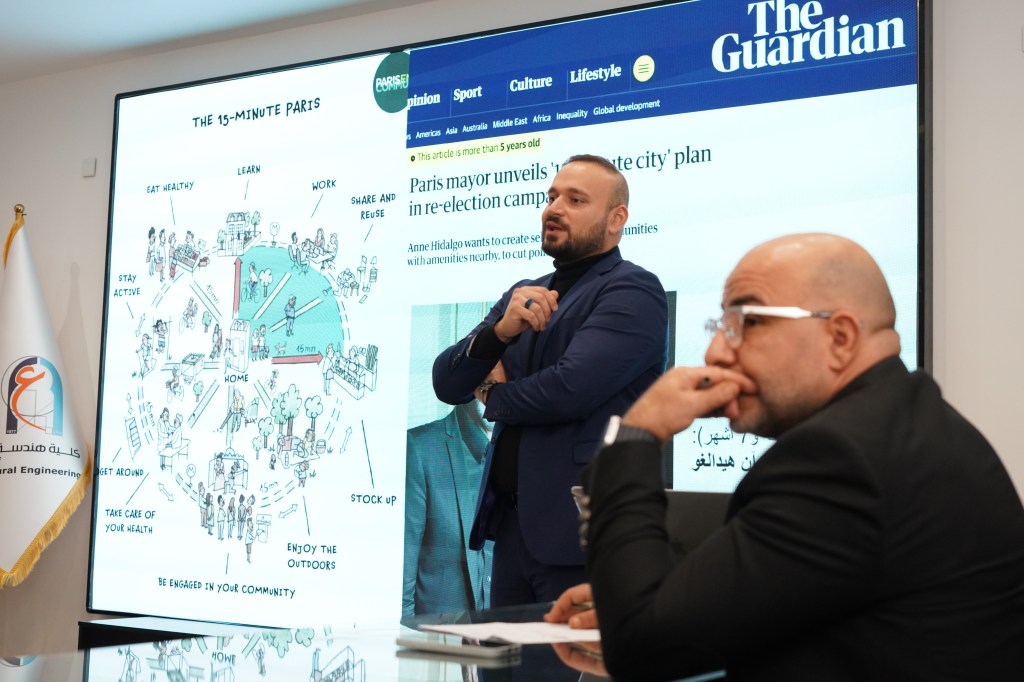
The workshop was moderated by Asst. Prof. Dr. Bashar Shamel and delivered by architect and urban planner Mustafa Sherif. The lecture aimed to introduce contemporary theories and practical approaches to urban design, city regeneration, and future-oriented planning, while linking global experiences to the local realities and challenges facing Iraqi cities—particularly Baghdad.
Key Themes and Discussions
The lecture addressed a wide range of interconnected topics shaping the future of cities, including:
- Future Cities and the ongoing transformations in urban planning in response to climate change, technological development, and social needs.
- Placemaking, or place-led development, as a human-centered approach that focuses on creating lively, inclusive, and meaningful public spaces shaped by people and everyday life.
- The 15-Minute City concept, which promotes access to daily needs—such as work, education, services, and recreation—within a short walking or cycling distance, reducing car dependency and improving quality of life.
- Human-Centered Cities, emphasizing the importance of prioritizing pedestrians, children, the elderly, and vulnerable groups in urban design.
- The role of Artificial Intelligence tools in urban analysis, design processes, and evidence-based decision-making.
Baghdad as a Living Case Study
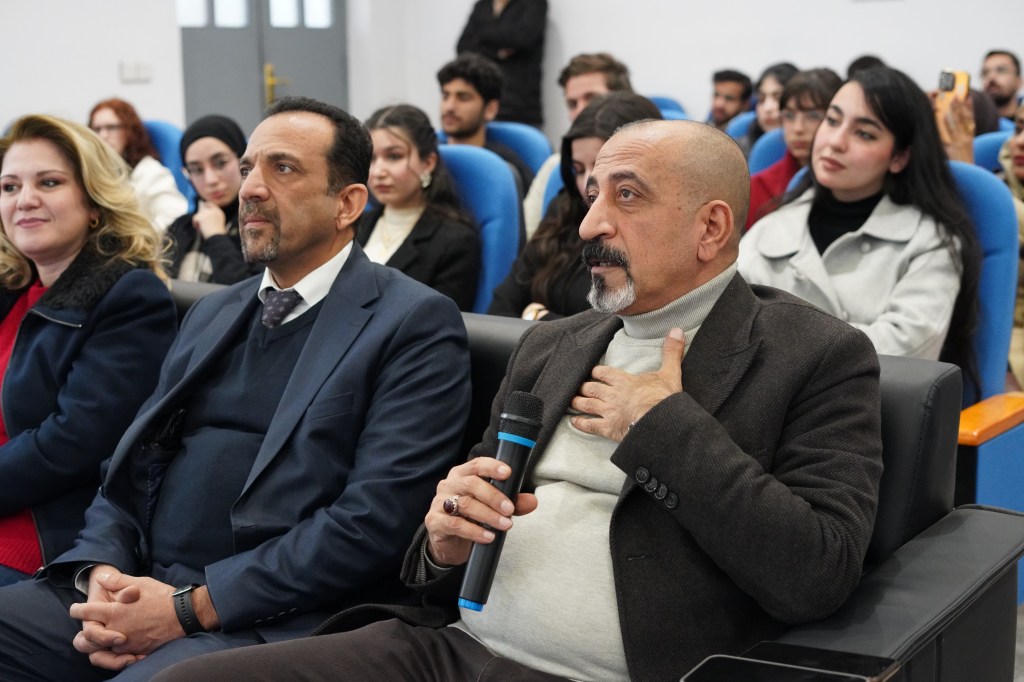
The workshop adopted an interactive format, encouraging active participation from faculty members and students. International case studies from cities around the world were presented and discussed, followed by open dialogue on how similar principles could be adapted to the context of Baghdad. Participants proposed alternative urban strategies and design interventions, stimulating critical thinking about streets, squares, neighborhoods, and public spaces as social and cultural systems—not merely physical infrastructure.
Education and Sustainable Development
A key message of the workshop was the importance of aligning architectural and urban planning education with the United Nations Sustainable Development Goals (SDGs). Particular emphasis was placed on:
- SDG 4: Quality Education, through modernizing curricula and exposing students to contemporary global practices.
- SDG 11: Sustainable Cities and Communities, by promoting inclusive, resilient, and livable urban environments.
The discussion highlighted the role of universities in shaping future professionals who are capable of addressing complex urban challenges through interdisciplinary thinking and socially responsible design.
Closing and Recognition
The workshop concluded with an open question-and-answer session, reflecting strong engagement and interest from students and academic staff. At the closing ceremony, the Dean of the College of Architecture Engineering, Professor Dr. Abbas Ali Hamza, honored architect Mustafa Sherif in recognition of his academic contribution and efforts in transferring international knowledge and professional experience to the Iraqi academic environment.
The University of Technology: A Platform for Future Urban Thinkers
The University of Technology in Baghdad, Iraq, is one of the country’s leading institutions specializing in engineering and technological sciences. Through academic events such as this workshop, the university continues to play a vital role in advancing architectural and urban knowledge, fostering innovation, and preparing a new generation of planners and designers committed to creating more human, sustainable, and inclusive cities.

 Mustafa Sherif