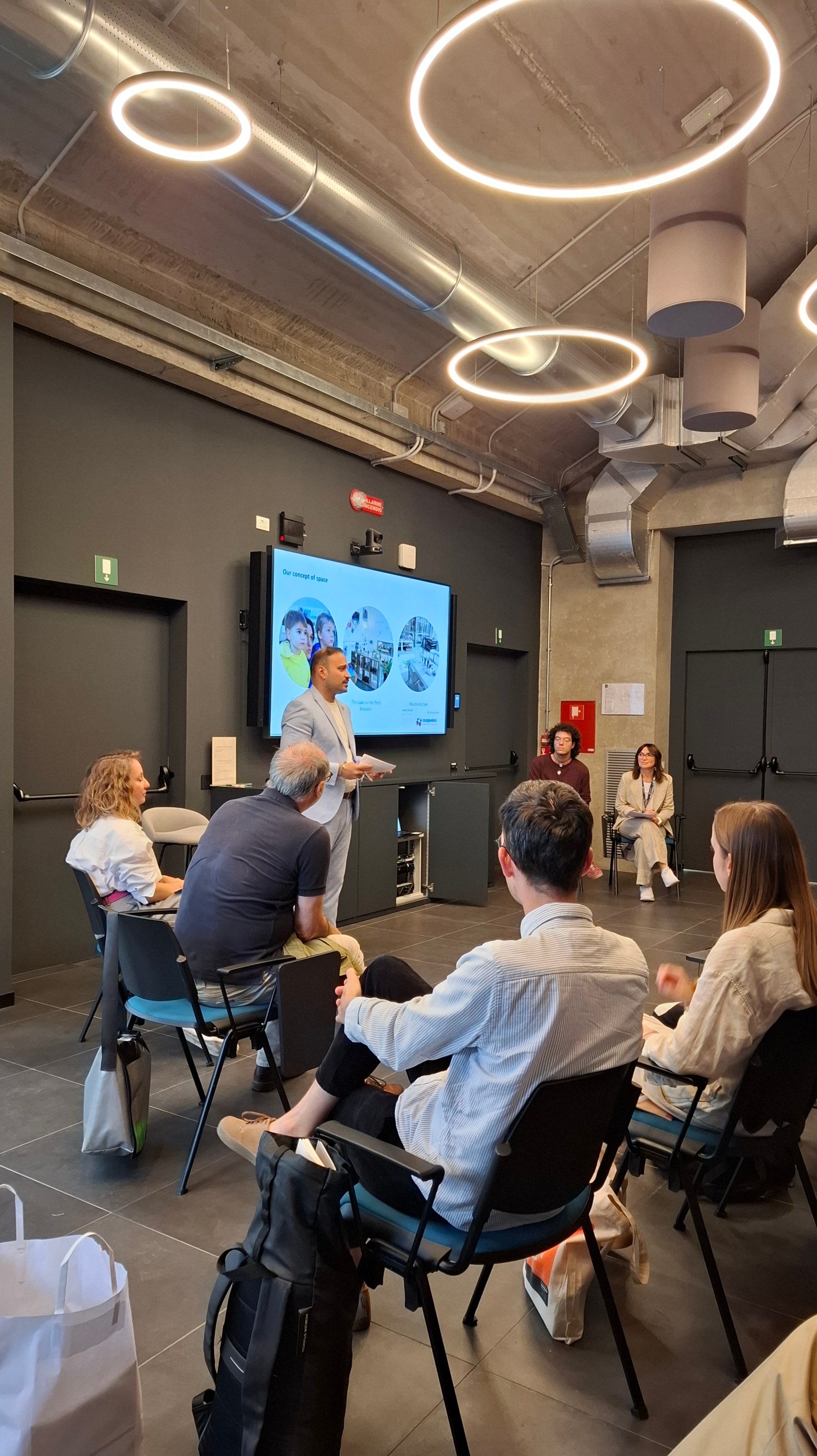
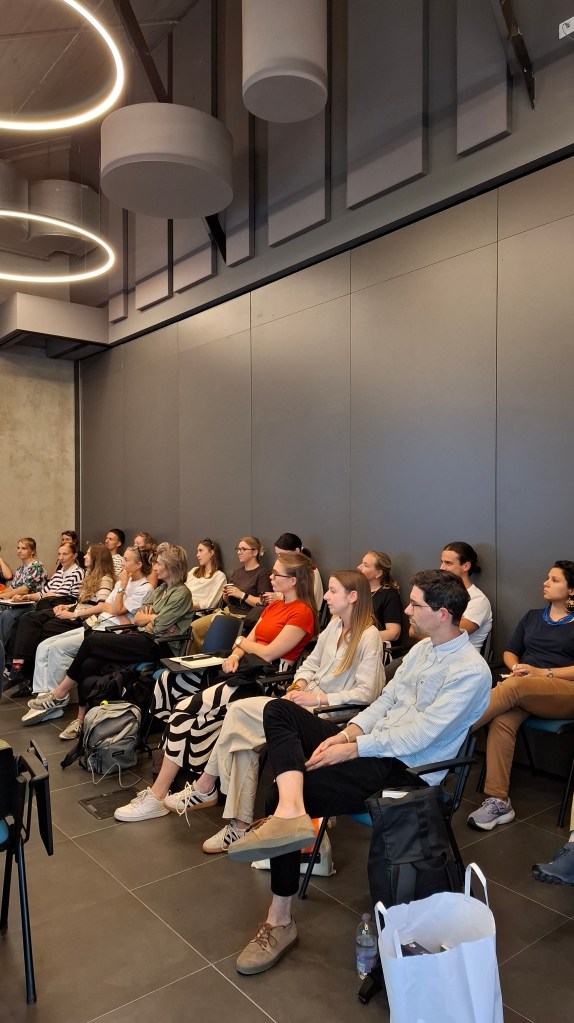
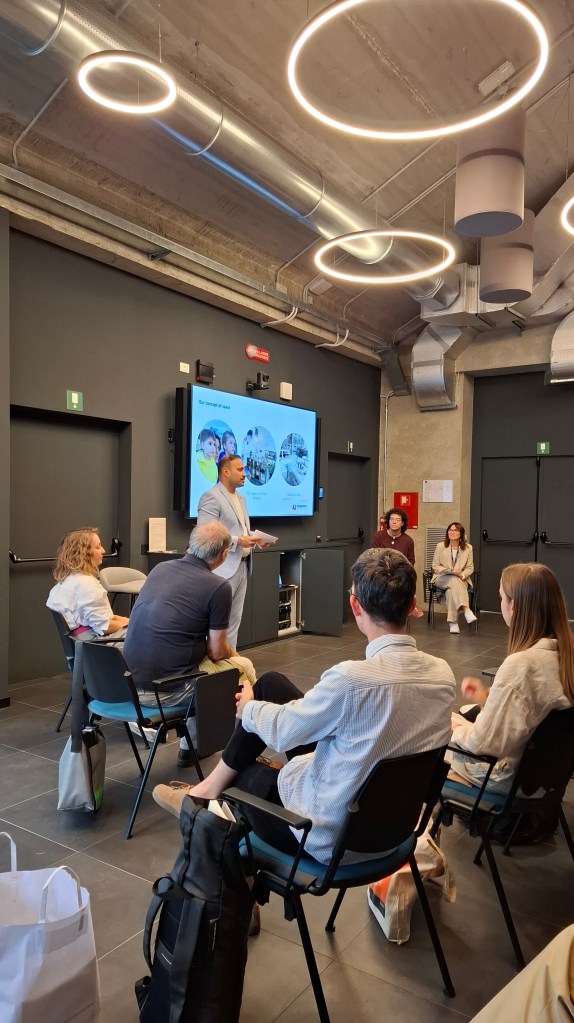
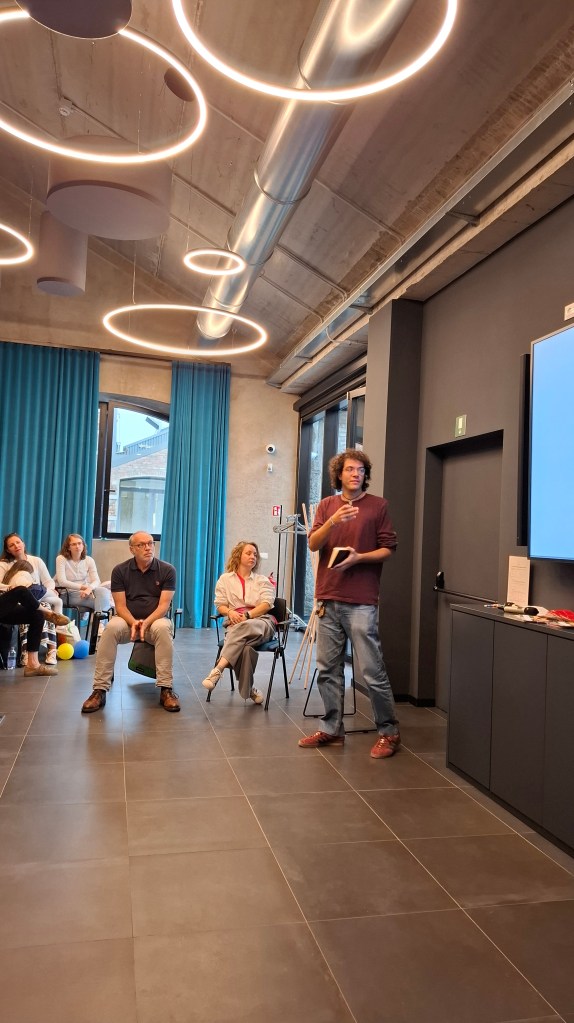
On September 25, 2025, I had the honor of moderating the session “Everyday Adventure: Designing the City for Children” during Placemaking Week Europe in Reggio Emilia. The session brought together educators, planners, architects, social innovators, and municipal leaders to explore one essential question:
What does a truly child-friendly city look like beyond playgrounds and posters?
A City That Teaches
Reggio Emilia is globally known for the Reggio Approach in education, a philosophy that sees children as capable, curious, and full of potential. Inside its schools, space itself becomes a teacher: light, texture, and layout invite participation and discovery.
But outside, the paradox remains. The city that gave birth to this philosophy still prioritizes cars over children. Streets often fail to reflect the same values of curiosity, safety, and collaboration that guide its classrooms.
Our panel included Bella Filatova (FOUR+), Andrea Boni, Paolo Gandolfi, Antonietta Casini, and Antonio Borgogni. Together we explored why the “city for children” concept so often stops at good intentions, what barriers prevent systemic change, and how we can reintroduce autonomy, movement, and play into everyday urban life.

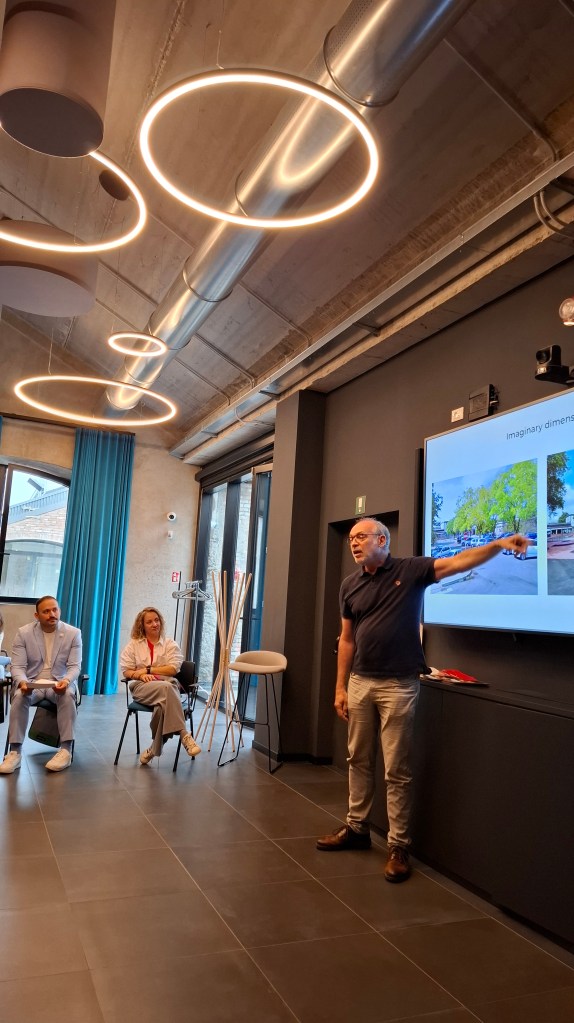
Bella Filatova – Architect and Co-Founder of FOUR+
Bella presented her City for Children methodology, showing how Reggio values can be translated into urban design. She reminded us that child-centered design is not about isolated playgrounds, but about embedding opportunities for exploration, learning, and participation throughout the city. Her examples from Serbia, Israel, and Italy illustrated how small interventions can create systemic shifts when guided by a clear pedagogical vision.
Andrea Boni – Architect and Author of Reggio Emilia Educating City
Andrea shared how Reggio Emilia’s educational philosophy can expand beyond school walls to shape the entire urban landscape. His reflections emphasized the importance of connecting local identity, documentation, and everyday rituals to spatial design. A child-friendly city, he argued, must also be a storytelling city: one that displays its learning and growth publicly, just like a Reggio classroom.
Paolo Gandolfi – Director of the Project Unit for Urban Mobility, Municipality of Reggio Emilia
Paolo offered the municipal perspective. He described how Reggio is rethinking its mobility systems to allow children to move independently and safely. Through neighborhood collaboration and bottom-up cycling initiatives, the city is slowly transforming its streets into learning spaces where safety and freedom coexist. His message was clear: mobility reform is not a technical task but a cultural one.
Antonietta Casini – Vice President, Coopselios Social Cooperative
Antonietta brought forward the pedagogical lens, reflecting on how Reggio’s educational principles can influence public space design. She described how ateliers and educational workshops inside kindergartens could inspire outdoor environments that nurture creativity and empathy. Her experience demonstrated that collaboration between families, educators, and local authorities is crucial for long-term transformation.
From Playgrounds to Public Life
Drawing on Filatova and Boni’s Educating City framework, the discussion highlighted six key principles that can guide cities toward transformation:
- Safety as Freedom – Streets and thresholds should guide, not restrict. When a child can walk alone to school, the whole city becomes safer for everyone.
- Curiosity and Discovery – Urban design can awaken exploration. Pavement drawings, playful lighting, and interactive elements transform daily routes into adventures.
- Contact with Nature – Even dense cities can host “wild” zones where children build, climb, and discover, reconnecting communities to nature.
- Local Identity – Public space should tell the stories of its people, making local heritage visible through art, color, and everyday rituals.
- Spaces for the Whole Family – True inclusion happens when children and adults enjoy the same spaces together: city squares as shared living rooms.
- Participation – Children must be co-creators, not passive beneficiaries. Their drawings, ideas, and play should actively shape our plans and policies.
These are not abstract ideals; they are practical tools for transforming how we design mobility, regulate urban growth, and define development.
Storytelling as a Tool for Change
In my work with Placemaking Sweden and the Urbanistica Podcast, I have seen how stories, not just strategies, can shift mindsets. When a planner hears a child describe their favorite shortcut to school or a parent’s fear of a dangerous crossing, data becomes empathy, and empathy becomes action.
Storytelling, in this sense, is civic infrastructure. It connects policy with daily life and helps decision-makers see the city through the lens of possibility, not limitation.
From Words to Action
As we concluded the session, one message resonated across disciplines:
A city for children is not a utopia. It is a method—a way of designing cities that are safer, more inclusive, and more democratic for all.
Reggio Emilia reminded us that designing for children is designing for everyone. If a city works for a five-year-old, it probably works for the rest of us too.
 Mustafa Sherif