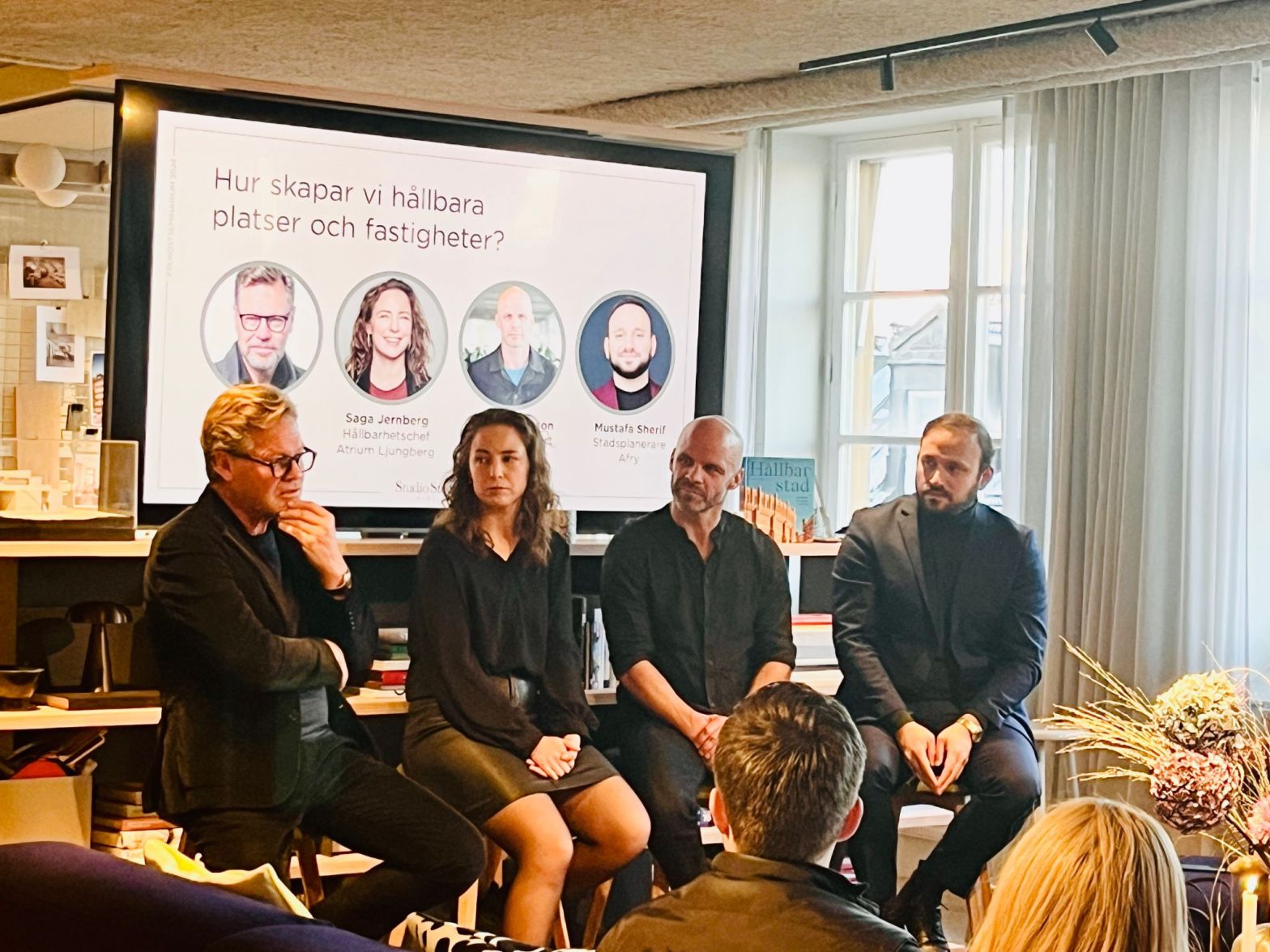
I was invited to join a panel to discuss Placemaking and its role in achieving sustainability. I highly recommend reading the book The City at Eye Level Asia-Pacific, which covers the pillars of Placemaking: hardware, software, and orgware.
You can access this book for free online in PDF here https://thecityateyelevel.com/app/uploads/2019/09/2019_CAELASIA_booklet-version2.pdf
From the book:
“To build a great city at eye level, one needs to consider three approaches;
hardware, orgware and software. These three approaches influence each
other; if you make changes in one sphere, changes in the others will follow.
Hardware is the physical appearance of buildings, streets and the city. The
design and building rules that can make a difference in creating a more
people-centred city. Hardware touches every scale of a city; the plinth,
the hybrid zone, the street, the area, and the city as a whole as well as the
connection between all the scales.
Orgware is the way we organize a good city at eye level. How can cities and
market parties work together. How can we give people influence to improve
their surroundings. How can we organize this is in a sustainable and viable
way. It can be adapted on different scales by creating teams and coalitions
for managing plinths, buildings, streets and cities. Various time-frames
such as quick wins and long-term strategies have to be taken into account.
Software is the least tangible part, nevertheless, equally important.
It regards the user’s experience and their perceivance of the built
environment. Aspects such as wayfinding in the area and the programming
are crucial to consider, as is the order of functions in a street or area. It is
also essential to incorporate a mixture of uses within the area and in public
spaces, on both smaller and larger scale.”
Repost from Studio Stockholm Arkitektur https://studiostockholm.se/
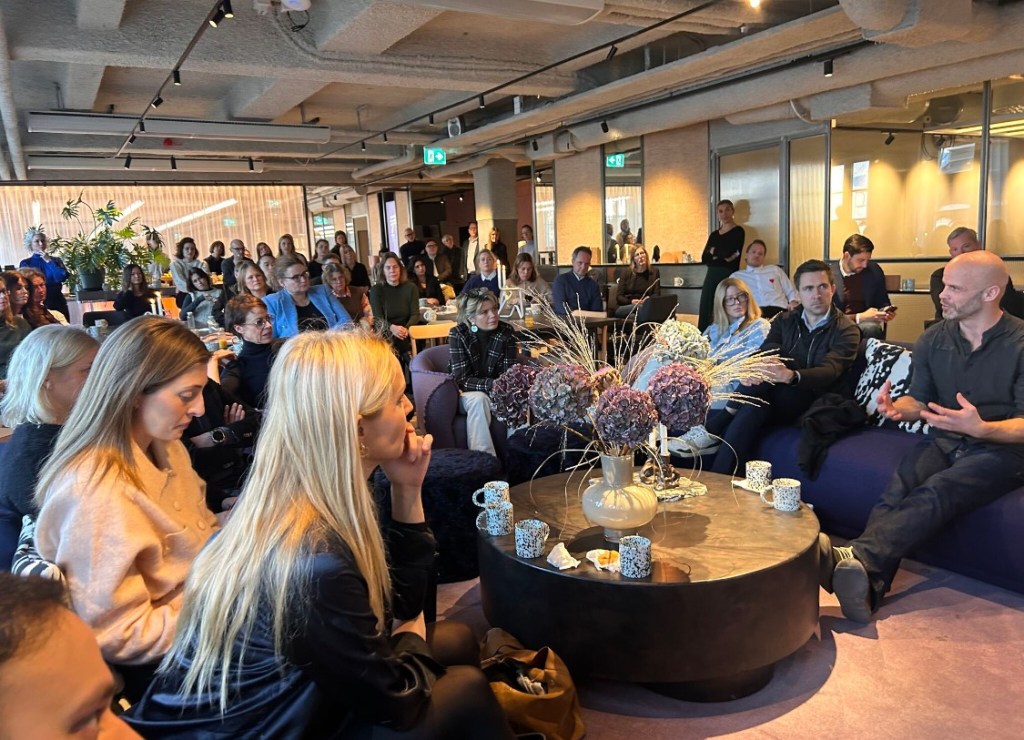
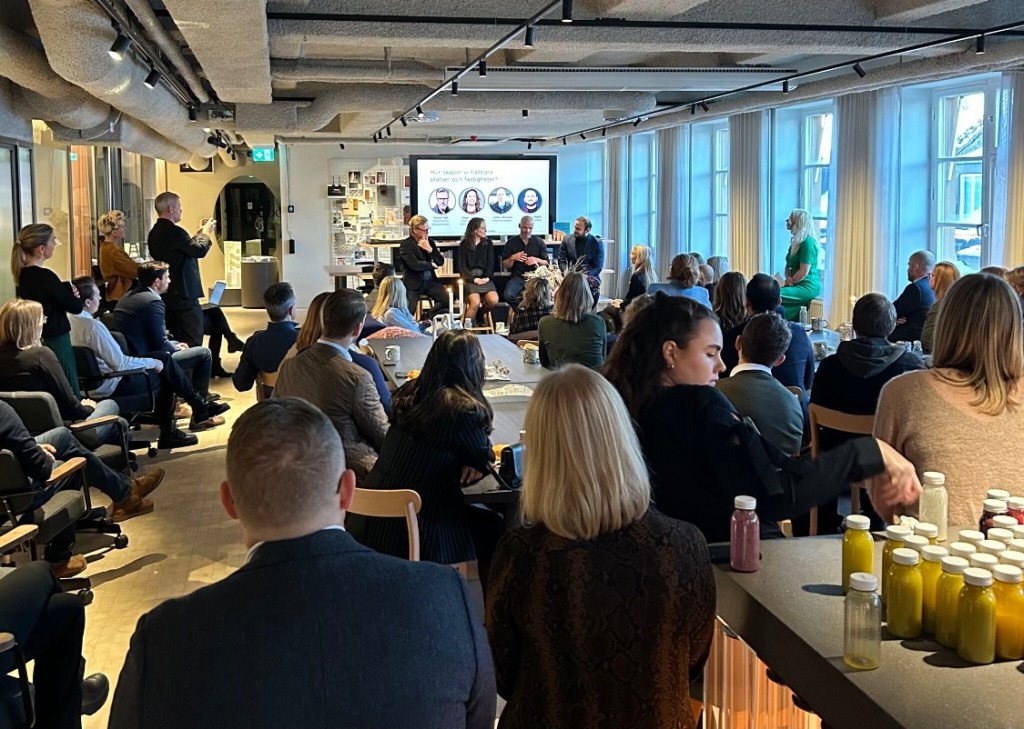
We’re so happy that so many of you joined us for our breakfast seminar on sustainability and its many complexities! The theme, “Sustainability—More Than Just Reuse,” sparked rich conversations, new perspectives, and innovative ideas.
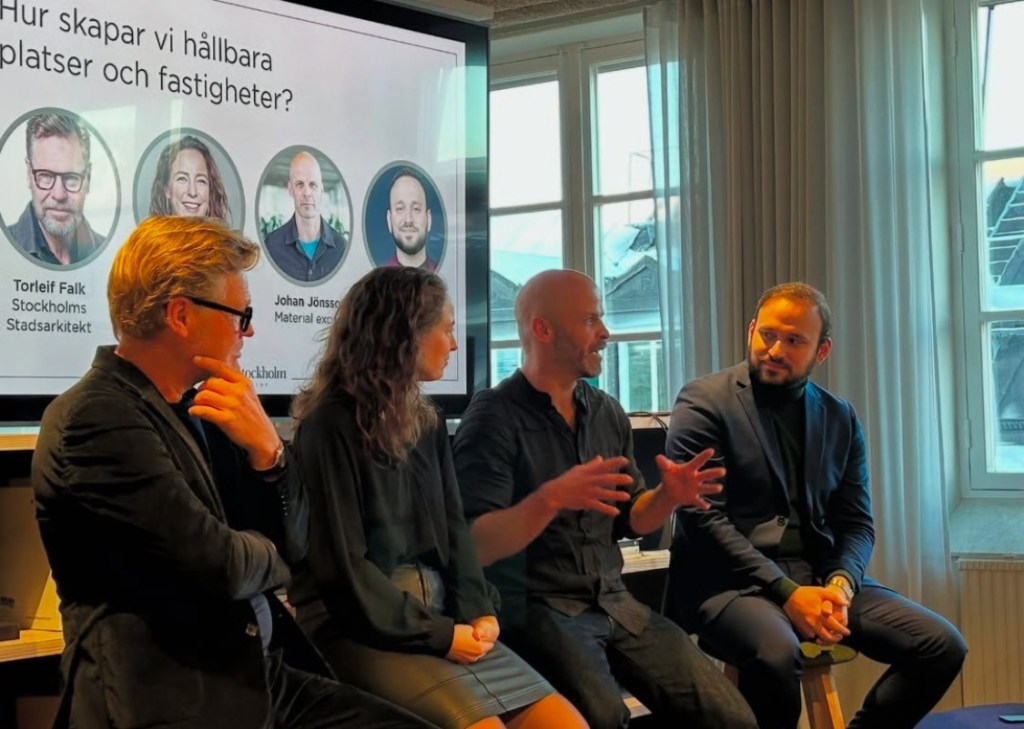
A huge thank you to everyone who started their day early with us, and a special shout-out to our incredible panel, who brought such depth and inspiration to the discussion:
Torleif Falk, City Architect for Stockholms stad, shared his vision of how urban planning can drive sustainability, emphasizing the importance of long-term thinking in creating resilient and inclusive cities.
Saga Wennberg Jernberg Head of Sustainability at Atrium Ljungberg, brought valuable insights on how to integrate sustainability into business strategies while maintaining a balance between environmental goals and commercial viability.
Johan Jönsson, Material Expert, offered a fascinating perspective on what makes materials truly sustainable, highlighting the importance of lifecycle assessments and innovative reuse practices.
Mustafa Sherif, Urban Planner at AFRY passionately advocated for designing cities that are not only sustainable but also inclusive and socially vibrant, with a focus on equity and accessibility.
With expert moderation by Vanna Gunnarsson, the panel delved into the challenges and opportunities of creating sustainable detailed plans, selecting durable and eco-friendly materials, and fostering urban spaces that are economically viable and alive with possibility.
We were also inspired by thought-provoking presentations from Carl Rössner and Karolina Nyström from Studio Stockholm Arkitektur who shared their experiences from two of our exciting projects:
The innovative concept and interior design for Jernhusen ABs headquarter, where 92% of the furniture is reused, setting a benchmark for circular solutions.
The transformation of Natur & Kulturs historic property near Humlegården, designed by Sven Markelius, where we combined our roles as both building and interior architects to honor the past while building for the future.
In this ongoing dialogue about sustainability, we reflected on the importance of creating environments that endure over time and age with dignity. Building for the future is about more than materials—it’s about designing spaces that promote well-being, inclusion, and adaptability.
Thank you to everyone who attended—it’s the conversations during coffee breaks that spark synergies, foster shared knowledge, and plant the seeds for groundbreaking collaborations.
Pictures by Studio Stockholm Arkitektur
Thank you Studio Stockholm Arkitektur for inviting me.
Keep up the good work
 Mustafa Sherif